What’s an intelligent home?
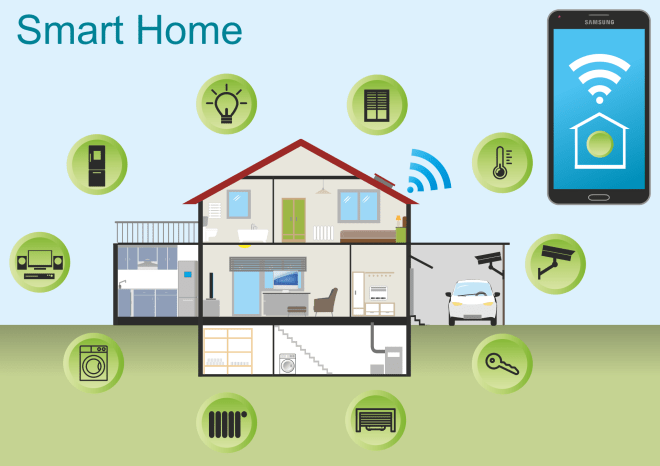
A smart home is a flexible home set up that enables appliances and equipment to be operated by mobile devices or other networked devices automatically from anywhere through an internet connexion. Devices inside a smart home are linked via the Internet to allow users to remotely monitor security features such as home access, temperature, lighting and a home cinema.
How smart homes operate and can be accessed by a smartphone, computer, laptop or gaming console. Door locks, TVs, thermostats, home monitors, cameras and lights can be operated by a home automation system, including refrigeration systems. The programme is mounted on a mobile device or other networked computer and the user can create time schedules to enforce such changes just by downloading the app or program for it.
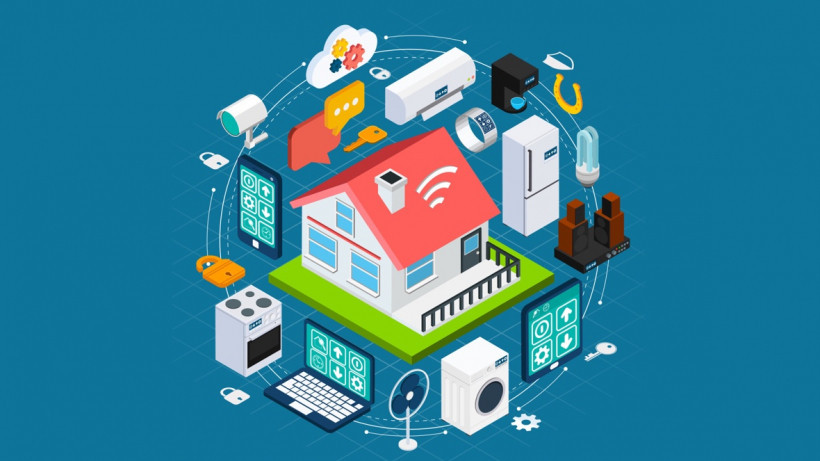
Intelligent home appliances come with the ability to self-learn,for example they can learn and adapt how to schedules temperature .For intelligent houses that are equipped for lighting controls, homeowners can reduce the use of electricity and save on energy. For certain home automation systems, the homeowner is alerted if any activity is detected while he or she is not present, and in urgent circumstances other people may call authorities – police or fire service. When linked, the Internet of Things technology (IoT), a network of physical objects that can store and exchange electronic information, includes devices such as a smart doorbell, an intelligent protection device and intelligent appliances.
Smart homes may have wireless or hardwired systems — or both. Easier to mount wireless devices. It can cost a few thousand dollars and is very cost-effective to put in a wireless home automation system with features such as smart lighting, climate control and protection. On the other hand, hardwired devices are perceived as more robust and typically harder to hack.The resale value of a home can be improved by a hardwired device. But there is a downside – it’s very expensive. Luxury and hardwired intelligent device installation will cost homeowners tens of thousands of pounds.
In 2016 the new technology was worth around $24 billion in the global domestic automation market. This figure is projected to increase by approximately $53.5 billion as more people continue to accept smart home technology by 2022. Video entertainment, along with home security and surveillance services, is projected to be the primary portion of smart home technology. Near to 31 percent of households use apps, such as the Amazon Echo or Google Nest, intelligent speaker technology has reached the US market successfully.
Advantages and Disadvantages of Smart Homes
Pros
The implementation of a smart home automation device, gives homeowners comfort. Homeowners can monitor thier home with one device, generally smartphones or tablets instead of managed appliances, thermostats, lighting and other functions using different devices.
When they are linked to a mobile phone (smart), users can receive feedback and updates on problems at home. Smart doorbells, for instance, allow homeowners to display and interact with persons who are not at home. The internal temperature, illumination and equipment can be set and operated by users.
Cons
Although the smart home provides convenience and cost savings, problem solving appliances. Safety threats and glitches continue to impact device manufacturers and consumers. For instance, adept hackers may access Internet-enabled devices from an intelligent home. In October 2016 a botnet called “Miraa” infiltrates DVRs, cameras and routers into interconnected computers in a denial of service attack, also known as a DDoS attack, which can bring down a range of major websites. The risk reduction strategies include protecting clever computers and apps with a strong password, using encryption where possible and linking trustworthy computers to your network only.

